
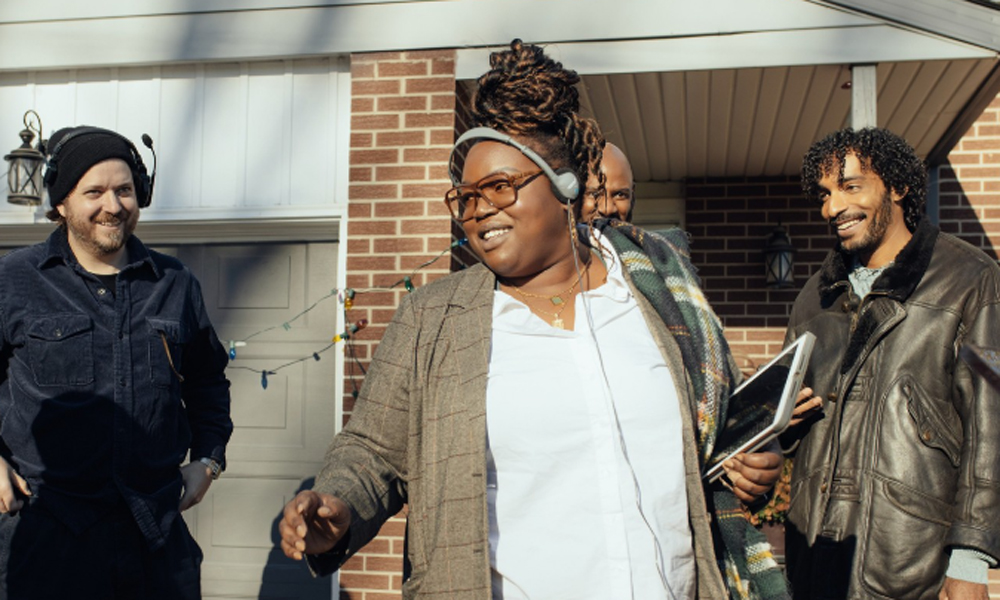
The feature film debut of CSA winner Sasha Leigh Henry not only challenges the conventions of the “hangout” story, but sheds light on a Black queer narrative rarely seen in Canada…
By William Koné
I love friendship stories. For me, they’re the most compelling films and television series because they invite writers to explore themes surrounding the human condition through multiple lenses. Friendship stories create conversation by showcasing different characters navigating emotional challenges in their own unique way. It’s a narrative tool that encourages you as a viewer to hold empathy for what these characters endure, even if you don’t relate to them. This normalizes our lived experiences onscreen. It’s the reason films like Waiting to Exhale, First Wives Club and The Best Man continue to resonate with people today.
“Hangout” stories elevate the genre by depicting quality time among friend groups within a specific setting. This was evident in TV with The Golden Girls, Living Single, Friends and Sex and the City as these characters mingled in their homes or at a local eatery. Conversations among these friends ranged from career aspirations to sex, to aging, to life satisfaction. The locations where the conversations took place became characters themselves. A connection was built between the viewer and the characters as the viewers watched these intimate exchanges strengthen, or hinder, the friendships.
Unfortunately, hangout stories have declined in recent years, despite the longevity they achieved decades earlier. Cultural historian Bob Batchelor has noted that streamers are less invested in the genre, as it takes longer for audiences to latch onto them. This is evident with the string of Black American hangout series that have been cancelled after three seasons or less, such as Run The World, Harlem, Grand Crew and South Side. In Canada, hangout content is even scarcer: Bellefleur is the only current scripted example on air. Meanwhile, hangout stories centring Black folks remain a rarity in our country. This creates a visible gap among new generations seeking stories centring the highs and lows of friendship.
Having said all that, when I attended the Toronto International Film Festival this year, it brought me great joy to learn that Sasha Leigh Henry’s feature film debut, Dinner with Friends, is, in fact, a hangout drama! I have admired Henry’s work since her short film Sinking Ship and the CSA-winning Bria Mack Gets a Life; her humanistic writing style often showcases the humanity of Black Canadian life.
Drawing from classic hangout films like The Big Chill and Diner, Dinner with Friends follows a group of Torontonians as they grapple with the pressures of adult living and the growing fractures within their bond. Through the course of many years, they convene at different dinner parties where difficult truths about their evolving identities and their wavering friendship emerge.
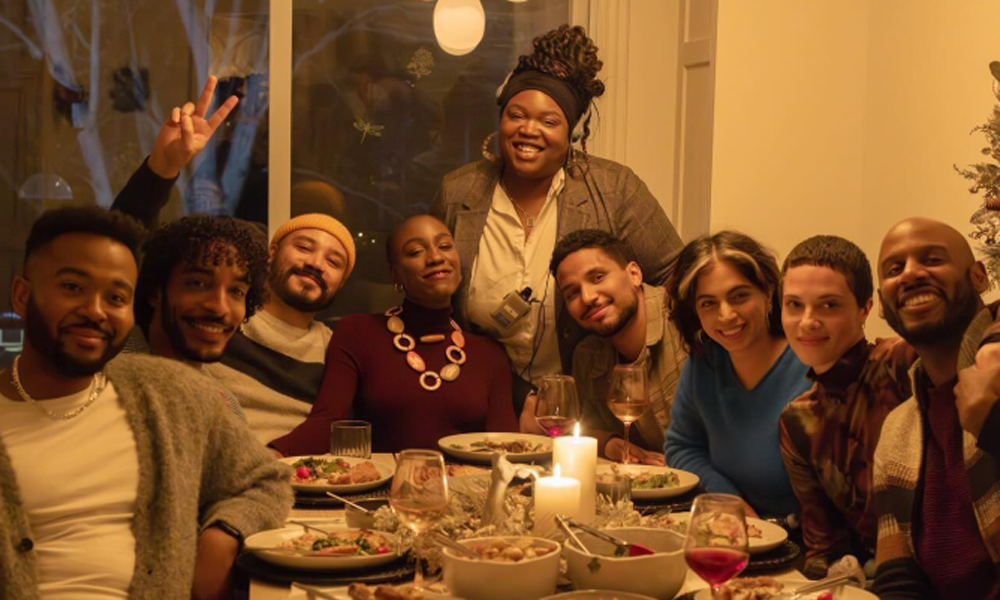
What distinguishes the film from its predecessors is its predominantly Black cast. In casting Dinner with Friends, Henry said, “The motivation was to create roles that would untether Black people from the strife of our identity. We don’t get to exist [onscreen] without it being some conversation about our race. What can I offer into the canon of storytelling that tells you something about us, while broadening the scope of what’s possible for us?”
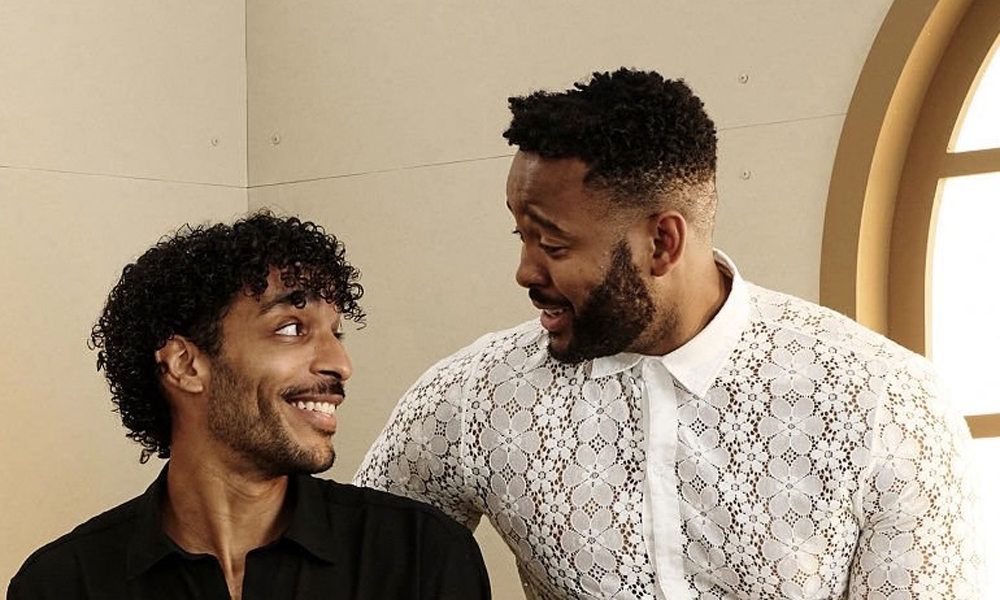
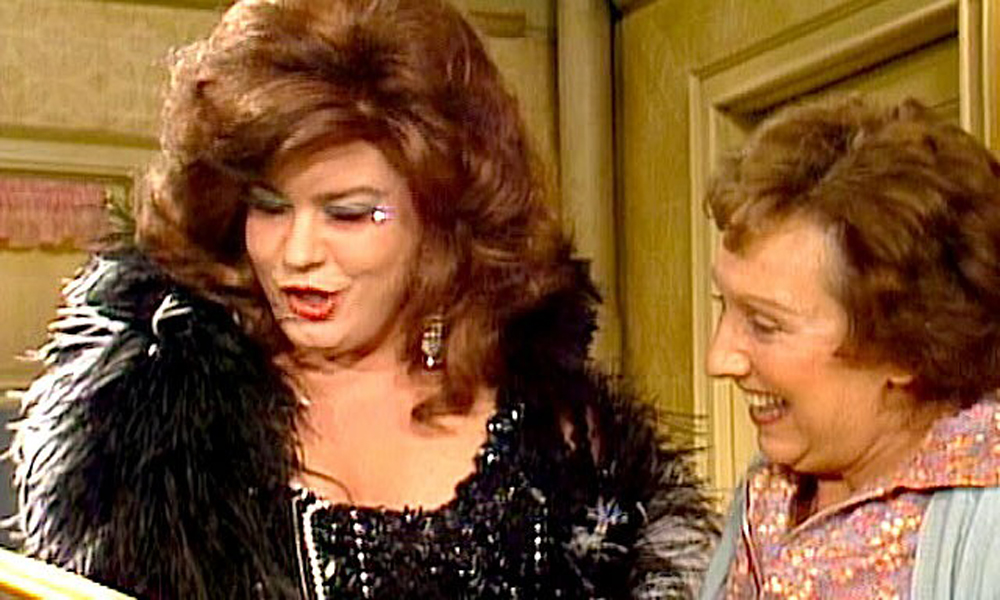
Henry and her screenwriting partner Tania Thompson expanded that thought further by including Black queer characters in the film. Josh and Ty (played by Leighton Alexander Williams and Michael Ayres) are a couple within this predominantly straight friend group, but their characters aren’t reduced to the “gay best friend” stereotype. Their relationship and their perspective carried as much emotional weight in the narrative as their hetero counterparts. This was quite refreshing to see, as hangout films historically didn’t feature queer characters in the core friend group. For example, Matthew Laurance’s character Ron in St. Elmo’s Fire was Demi Moore’s flamboyant neighbour, but his character lacked a point of view. Ron served as a comedic gag and an eventual plot device to confirm Andrew McCarthy’s heterosexuality.
In depicting queerness in Dinner with Friends, Henry’s intentions were different. “It was important [to include queer characters] because there are eight friends in the film,” says Henry. “Most of my friend groups have at least one queer person in them. We just don’t have enough decent representations of Black queerness that aren’t about their coming out story. I wanted to offer that freedom for those performers when we cast Josh and Ty.”
In playing Josh and Ty, Leighton Alexander Williams and Michael Ayres stress that very point. “It’s always been my dream to play fully realized characters, regardless of their sexuality,” Williams states. “Being trusted to bring a strong queer character like Josh to life was truly a gift. While Josh can be sharp-tongued, hot-headed, and cantankerous…he’s also hilarious, loyal, honest and charismatic. Those are my favourite types of characters!”
“It was so rejuvenating to be a part of this film,” Ayres shares, “to play a queer character who isn’t defined by a struggle with their queerness. Ty’s and Josh’s queerness and their Blackness is a fact rather than an issue, which is kind of subversive.”
An exploration of grief
What drew me to Dinner with Friends was the exploration of grief surrounding fractured friendships. Grief Theory describes loss in two ways. Primary losses describe the event that elicits a devastating change to one’s life, such as a death or a breakup; while secondary losses are the residual changes surrounding that event, such as a change in identity or a change in beliefs. While hangout stories often follow friendships thriving over time, Dinner with Friendschallenges that trope by highlighting the pain of estranged bonds. This is especially true with Josh and Ty’s story, as they contend with the disconnect between their aspirations as a queer couple and the aspirations of their straight friends. As the only characters without desires for parenthood, both question whether there’s a place for them in the group as they continue to pivot from heteronormative milestones. It’s a harsh reality that many 2SLGBTQI+ folks contend with, but such a nuanced perspective often isn’t considered in stories featuring predominantly straight characters.
“The film hits close to home because I’m in that phase of my life right now,” says Ayres. “I’m on a totally different trajectory than many of my friends, not just because I’m queer but because I’m living as an artist. You don’t always get to take everyone with you when you move into new chapters of your life. It gets harder to close the distance between you and the people you thought you would always be in proximity to.”
Williams drew from his own experiences to portray this emotional conflict in Dinner with Friends. “I’ve had friends who I loved deeply, but life pulled us in different directions because our values no longer aligned. As a result, those friendships came to an end. Losing friends in real life helped me fight to hold on to the ones Josh had [onscreen],” Williams notes.
Showing these characters contend with the isolation of queer life, I argue, elevates hangout stories by unpacking what is needed for 2SLGBTQI+ folks to be seen as their authentic selves within straight spaces. This is a need that I believe is fundamental for any lasting friendships, regardless of sexuality.
True-to-life characters
As characters, both Josh and Ty are compelling. Beyond the playfulness they present onscreen, what I appreciated most was their ability to be unapologetically feminine and masculine in their gender expression without judgment from their peers. “Yes, their environment in this film is extremely straight, but it’s still a safe space for Josh and Ty to move through,” says Ayres. “They’re never in danger among their friends, which is nice.” As a couple, Josh and Ty’s dynamic carries a yin-and-yang quality. While Josh possesses a simmering yet sensitive bravado, Ty is quietly perceptive based on his observations of those around him.
This is highlighted during the film’s climax, when an altercation finds Josh and his straight friend Joy (played Tattiawna Jones) exchanging verbal blows because of their conflicting lifestyles. It is Ty who consoles and challenges Josh after the fight, allowing viewers to witness the loving nature of their relationship. “It’s one of my favourite scenes I shot with Michael,” Williams states. “Their [Josh and Ty’s] argument exhibited emotional intelligence and a great deal of listening from both men. We can see why they work as a couple and why they have the strongest relationship in their friend group.” Ayres seconds his scene partner’s remarks. “The two of them are the sturdiest pair out of all the couples in this film. You can really feel how much they love and support one another, even as they disagree and get on each other’s nerves. It’s aspirational without being unrealistic. Their relationship is kind of a dream.”
Ayres’ point was one of my key takeaways as I left the Dinner with Friends screening. I was reminded that film has the power to be impactful and aspirational at the same time. It’s a temporary escape into a world of possibilities that can instill hope within our lives. As a screenwriter and as a Black gay man, I’ve been longing for stories like Josh’s and Ty’s to legitimize a queer way of being that offers compassion through our personal journeys. When you don’t see images of yourself reflected in media, a sense of despair persists as you question whether there’s a place for you to thrive in life. It felt inspiring to witness Henry successfully fight to make a film that not only advocates for Black folks’ triumphs and pains within friendships, but to also spotlight love among Black queer folks as they stand firmly within their authenticity.
“I hope we see a variety of stories including Black queer bodies. That our characters experience joy, love and success. I’m ready for a renaissance of storytelling where Black queer characters exist in different stories. We deserve light-hearted romcoms, more queer folx falling in love, and badass Black queer superheroes,” Williams comments. Ayres, in discussing his hopes for Black queer storytelling, also strives for diverse representation. “I want to see complicated and unlikable Black queer characters onscreen, who are allowed to be messy and make mistakes. I want to see myself reflected in the entirety of my experience as a person. There is space for different kinds of struggles beyond identity. There is space for stories where we don’t have to be on our best behaviour.”
As the fate of hangout stories continues to loom, Dinner with Friends stands as a welcomed addition to the canon. The film reminds us that in maintaining curiosity for new perspectives within friendships onscreen, there’s room for the legacy of the genre to grow and to be celebrated.
WILLIAM KONÉ is a Black gay screenwriter and a registered psychotherapist based in Toronto. A self-proclaimed TV enthusiast and a long-time member of the Beyhive, he has a penchant for ’90s media, relationship dramas and the Real Housewives franchise.


POST A COMMENT