
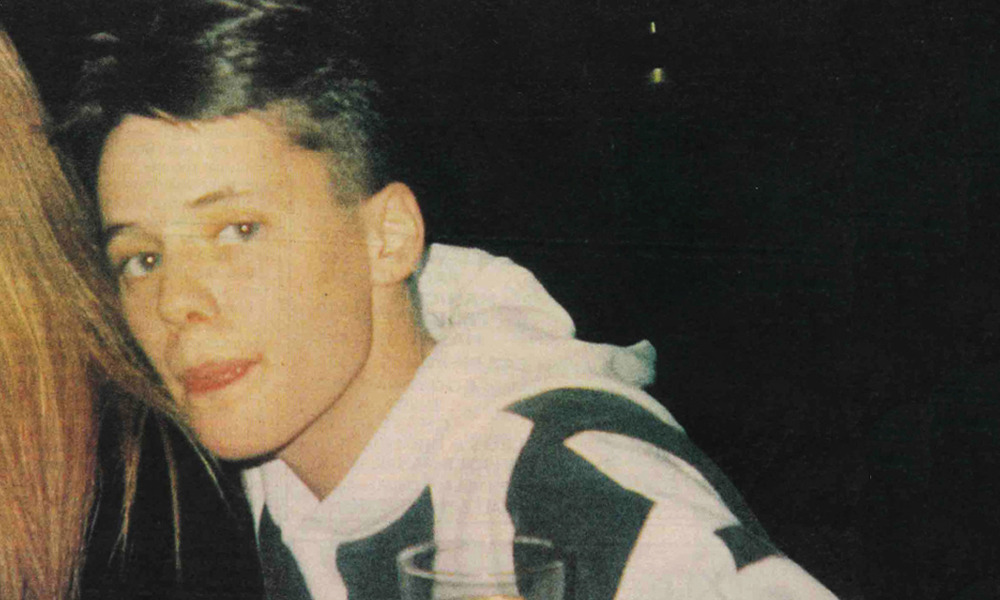
His 1993 murder exposed the dangers of living authentically in a world not ready to understand. Three decades later, Teena’s story continues to shape how North America talks about gender, justice, and who deserves protection…
By Christopher Turner
On New Year’s Eve, 1993, in a quiet farmhouse outside of Humboldt, Nebraska, three people were murdered: Brandon Teena, a 21-year-old transgender man with big blue eyes; Lisa Lambert, a 24-year old mother who had offered him refuge; and 22-year-old Phillip DeVine, a friend of Lambert’s who was visiting with his girlfriend for the holidays. The murders would go on to shock far beyond the small town. In both Canada and the United States, the shocking hate crime would eventually help reshape how we understand identity, safety, and the right to be believed.
The killers – two local men, John Lotter and Tom Nissen – had raped Teena just days before the New Year’s Eve murders. When Teena went to the police following the assault, he named both of his attackers and asked for help. The police did nothing. What happened next would not only expose devastating institutional failures but would ripple across North America, influencing hate-crime laws in both the United States and Canada, inspiring award-winning films, and reshaping how the world talks about gender identity.
During Teena’s lifetime (1972–1993), there was almost no awareness about trans – or any kind of gender-variant – people in the small town of Humboldt, especially in Teena’s family and circle of friends. More than 30 years on, Teena’s story isn’t just one of violence, and one that is part of queer history – it’s a mirror. His courage to live authentically, and the indifference that met his decision, still challenge us to ask: whose lives are we willing to protect?
Here’s a look back at the events surrounding the tragic 1993 murder of Brandon Teena.
Becoming Brandon
Brandon Teena was born biologically female on December 12, 1972, in Lincoln, Nebraska, to single mother JoAnn Brandon. She was widowed eight months before he was born, after Teena’s father died in a car accident in Lancaster County, reportedly as a result of alcohol-related circumstances. Shortly after birth, Teena (who was then called Teena Ranae Brandon) and his older sister, Tammy, went to live with their maternal grandmother; they would stay with her until their mother reclaimed them after she remarried in 1975 (when Teena was three years old and Tammy was six). The impoverished family then resided in the low-income Pine Acre Mobile Home Park in northeast Lincoln. The family wasn’t a particularly happy one, and the marriage didn’t last long; the pair divorced in 1980.
Teena had a difficult childhood that involved not fitting in, conflict, and extensive sexual abuse. As young children, both siblings were sexually abused by their uncle for several years; Tammy reported this to their grandmother but was ignored. Teena eventually sought counselling for the abuse in 1991, when he was 19.
But, before those counselling sessions, Teena struggled. From a young age, feeling like a boy but living in a girl’s body, Teena gravitated towards boyhood, insisting on short haircuts and wearing boys’ clothes to school (first St. Mary’s Elementary School, followed by Pius X High School in Lincoln). In high school, he was assaulted by a classmate, but he dropped the charges after reporting the crime. His junior year, he attempted suicide by antibiotic pills and he spent time in the Lincoln Crisis Program, which diagnosed him with a personality disorder and in 1992 labelled him “transsexual” – a term that is now considered incorrect and outdated.
Teena began using the first name “Brandon” as a teenager and began openly living as a man, a decision that alienated some in his conservative community but gave him a sense of self that he had always craved. He fully embraced a male identity and frequently used masculine variants of his dead name (a term for the name a trans person was given at birth, or the name they used prior to transitioning). These variants included Billy Brinson, Billy Brandon and, as we use in this story, Brandon Teena. As a teenager he bound his chest with Ace bandages, wore baggy shirts to further hide his chest and, when he started to date, stuffed a sock in his pants, using the bulge to convince local girls that he was indeed a boy.
Teena reportedly told his various girlfriends several different stories about himself, including that he was born intersex, that he had had gender-reassignment surgery, or that he was at the beginning of the surgery process.
While Teena did find some acceptance in those early years living as a boy, his mother admittedly struggled to understand and rejected his male identity, continuing to refer to him as her daughter – something she continued to do after his murder.
“As she was growing up, she was ornery and full of life,” Teena’s mother said in 2000. “She was a prankster, and she was a tomboy.”
Without a support system, Teena began skipping school, received failing grades, and was ultimately expelled from Pius X High School in June 1991, just three days before graduation. So, he enlisted in the United States Army shortly after his 18th birthday, hoping to serve a tour of duty in Operation Desert Shield. However, he failed the written entrance exam because he listed his sex as male. After that, Teena continued to present as male and largely supported himself with menial jobs and some petty crime. Following a number of convictions for cheque fraud that resulted in sentences of probation, Teena made the move to the Falls City region of Richardson County, Nebraska, in November 1993.
In Falls City, Teena found shelter with a young single mother, Lisa Lambert, with whom, by some accounts, he also had a brief romantic relationship. They lived in a dilapidated farmhouse in a rural area, along with Lambert’s baby from a previous relationship. He made friends and charmed nearly everyone he met – especially young women. Friends, who all purportedly assumed Teena was a biological male, described him as “sweet,” “kind,” and “funny.”
Teena, almost immediately, began dating Lambert’s friend, a 19-year-old woman named Lana Tisdel, and fell in with a group of young people that included John Lotter (Tisdel’s ex-boyfriend) and Marvin T. Nissen, both of whom had criminal records and long histories of violence and instability.
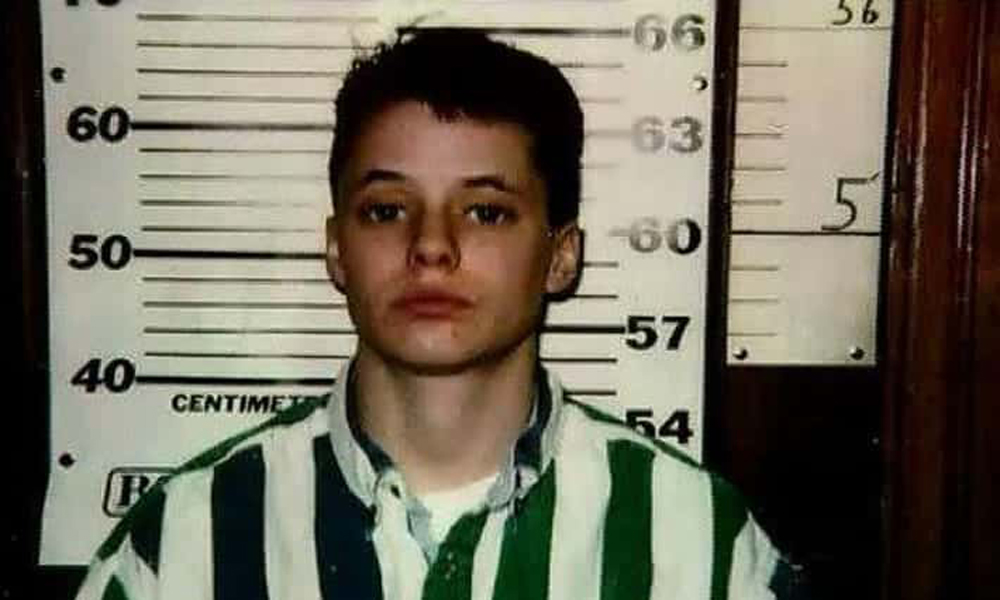
“Brandon was nicer and looked better than any boy I’d ever been with,” Tisdel later told journalist Donna Minkowitz in the original Village Voice article that launched mainstream awareness of Teena’s story. “With a lot of guys around here, it [doesn’t] matter what the woman wants, but Brandon wouldn’t tell a woman to do anything – he asked. He knew how a girl liked to be treated.”
Things were going well for Teena, but that only lasted for a few weeks. On December 19, 1993, he was arrested once again for forging cheques. A court appearance and subsequent notice in the local newspaper revealed his birth name and thus his biological sex.
The night everything changed
On December 24, 1993, Teena attended a Christmas party with Tisdel and their circle of friends, which included Lotter and Nissen. When rumours began to circulate about Teena’s gender identity – thanks to local police revealing his birth gender in the newspaper report of his court appearance – the tension in the room shifted.
According to The Atlantic, “Upon discovering Brandon was a biological female, Lotter and Nissen became obsessed with proving his anatomy to Lana, forcibly disrobing him in a bathroom on Christmas Eve, and hours later, raping him.”
After Teena was indecently and involuntarily exposed in the bathroom at the party and later sexually assaulted by Lotter and Nissen, he was treated at the local hospital and tested positive for traces of semen. Tisdel convinced Teena to file a police report, though Nissen and Lotter had warned Teena that they would kill him if he did so. Still, following his release from the hospital, Teena went to the Richardson County Sheriff’s Office, where he met Sheriff Charles B. Laux – a man who would later become infamous for his cruel and demeaning treatment of Teena.
Instead of offering compassion or protection, Laux interrogated Teena with hostility and disgust, fixating on his anatomy rather than on the assault that had happened hours earlier. His interview tape, acquired from the Richardson County Sheriff’s Department and later made public by documentary filmmakers, revealed a shocking lack of empathy. “Do you run around once a month or something?” the sheriff asked Teena. The recording would become one of the most chilling examples of institutional transphobia ever caught on tape.
“He didn’t fondle you any, huh. Didn’t that kind of amaze you? Doesn’t that kind of, ah, get your attention somehow that he would’ve put his hands in your pants and play with you a little bit?”
Although Teena named both of his attackers and there was ample evidence, no arrests were made. In fact, the sheriff told Lotter and Nissen about the report – effectively warning them. Within days, Teena’s attackers returned to finish what they’d started.
“What kind of a person was she? The first few times we arrested her, she was putting herself off as a guy,” Laux told Minkowitz in the original Village Voice article.
December 31, 1993
One week after the sexual assault, Teena was at Lambert’s farmhouse in Humboldt waiting for news about the case. Phillip DeVine, a young Black man who was an ex-boyfriend of Leslie Tisdel, was staying there as well. Lambert’s young son, Tanner, was also inside the home that night.
According to a later report by Tisdel, Lotter told her, “I feel like killing someone,” shortly before he did.
Around 1:00 am on December 31, 1993, Lotter and Nissen drove to Lambert’s house and broke in. The pair found Lambert in bed and demanded to know where Teena was, but Lambert refused to tell them. After Nissen searched the farmhouse and found him, Teena was shot. Nissen later testified in court that he had noticed that Teena was twitching, and he asked Lotter for a knife, with which he stabbed Teena to ensure that he was dead. Nissen also later testified that he shot Lambert in the stomach at this point. After leaving the room to find DeVine, and then returning with him, Nissen shot Lambert a second time. The two men then took DeVine into the living room, sat him on the couch, and shot him twice. Nissen then returned to the bedroom, where he shot Lambert again. The two men then left, threw their weapons and gloves onto a frozen river, and returned to Falls City.
Lambert’s mother discovered the three dead bodies the following day, all shot “execution style” as reported by the Village Voice. Lambert’s infant son was also still there and was not harmed. DeVine was slumped over the couch in the living room, having sustained two gunshots to the head. Lambert sustained three shots to her chest and head. Teena was shot twice under the chin and then stabbed in his liver.
When police arrived, they treated the scene with shocking indifference. It would later emerge that Laux’s office was careless at the crime scene and had ignored repeated warnings that Teena’s life was in danger. The murders were not a surprise: they were the tragic consequence of deliberate inaction.
Lotter and Nissen were arrested that afternoon, after which Nissen told deputies that he had witnessed Lotter shoot three people to death in Humboldt. Police went to the river, where they retrieved the gloves and weapons, including the knife’s sheath marked with Lotter’s name, tying them to the crime.
The trials and the reckoning
After both men were arrested and charged for the slayings of Teena, Lambert and DeVine, Nissen turned on Lotter. He testified against him in court as part of a plea deal, saying that Lotter was the mastermind in the Humboldt farmhouse that night. In exchange for his co-operation and testimony, Nissen was given a sentence of life imprisonment. Lotter, who was tried after Nissen, received the death penalty in Nebraska, a sentence that remains in place more than 30 years later.
The trials drew national attention – not only for the brutality of the murders but for what they revealed about the deep-rooted prejudices within small-town law enforcement and media. Court transcripts showed the sheriff’s negligence in chilling detail, and advocates across the country began calling for change. That change came, but not immediately.
In 2001, after years of legal battles, Teena’s mother won a civil suit against Richardson County and Sheriff Laux. The Nebraska Supreme Court ruled that Laux had “failed to protect” Teena and “exhibited extreme indifference” to his rights. It was one of the first rulings in the United States to explicitly acknowledge law enforcement’s mistreatment of a transgender victim. The damages awarded to Teena’s mother – just under $100,000 – were small, but the verdict was enormous. For the first time, a court publicly affirmed that what had happened to Teena wasn’t just a crime of two violent men; it was a failure of an entire system.
As for those two men: Nissen rescinded his testimony against Lotter in September 2007, admitting that he was the primary assailant and that Lotter was merely his accomplice. In 2009, Lotter appealed his conviction, using Nissen’s new testimony to assert a claim of innocence. That appeal was rejected by the Nebraska Supreme Court, which held that since (even under Nissen’s revised testimony) both Lotter and Nissen were involved in the murder, the specific identity of the shooter was legally irrelevant. In the years that have passed since the original trials, all appeals and requests for re-hearings have been denied at all levels of the legal system.
Today, Lotter is at Tecumseh State Correctional Institution, while Nissen is at the Lincoln Correctional Center.
How the media told (and distorted) Brandon Teena’s story
Teena’s murder became national news almost immediately, but the early coverage was rife with sensationalism and transphobia. Reporters misgendered Teena repeatedly, referred to him as “a woman who lived as a man,” and framed the case as one of deception rather than violence.
It was a different time and there was little awareness about trans or any kind of gender-variant people, but the framing of Teena’s story was deeply influencing public perception. To mainstream audiences, Teena’s story was not that of a trans man fighting to live authentically – it was a “tragic impostor” tale. The nuance of his identity and humanity was erased.
That transphobic narrative began to change with the release of The Brandon Teena Story (1998), a documentary directed by Susan Muska and Greta Olafsdottir that used police interviews and local footage to restore some of that humanity. But it was Boys Don’t Cry (1999) – Kimberly Peirce’s Oscar-winning film – that cemented Teena’s story in cultural memory. Boys Don’t Cry memorably starred Hilary Swank as Teena and Chloe Sevigny as Tisdel. For their performances, Swank won, and Sevigny was nominated for, an Academy Award.

Swank’s performance was widely praised; she also won the Golden Globe and numerous other accolades. Yet, as trans advocacy grew in the 2000s and 2010s, Boys Don’t Cry faced growing criticism for casting a cisgender woman in a trans man’s role and for omitting DeVine entirely from the story. The film, while groundbreaking, was also emblematic of Hollywood’s blind spots: celebrating empathy while erasing intersectionality.
Still, Boys Don’t Cry shifted something in pop culture. For many, it was the first time they had seen a transgender character portrayed with dignity and depth, not as a caricature. It opened doors for conversations about representation, about who gets to tell whose stories, and about the cost of visibility in a world that still punishes difference.
From Nebraska to North America: The legal and cultural ripple effect
In the United States, Teena’s murder became a rallying cry for federal hate-crime legislation. Although Nebraska itself resisted change for years, national advocacy groups cited his case and Matthew Shepard’s 1998 murder as proof of the urgent need for legal reform. Sixteen years later, in 2009, the Matthew Shepard and James Byrd Jr. Hate Crimes Prevention Act expanded federal hate-crime laws to include crimes motivated by sexual orientation and gender identity.
In Canada, both Teena’s and Shepard’s stories resonated deeply. In the late 1990s, Canada was undergoing its own reckoning with queer and trans rights. However, it wasn’t until 2017 that Bill C-16 formally added “gender identity and gender expression” to the Canadian Human Rights Act and Criminal Code – an achievement won through decades of activism that was, in part, fuelled by stories like Teena’s.
Remembering the victims: Beyond a single narrative
It is impossible to talk about Brandon Teena without also naming Lisa Lambert and Phillip DeVine. Lambert, a 24-year-old single mother, had offered Teena a place to stay when he feared for his life. DeVine, a 22-year-old Black man, was in the wrong place at the wrong time – but also the victim of a system that rarely recognizes intersecting forms of prejudice.
For years, Lambert’s and DeVine’s names were left out of the retellings. DeVine’s complete omission from the story, particularly in Boys Don’t Cry, was not incidental – it reflected how stories of Black victims, especially those adjacent to queer narratives, were often sidelined in mainstream media.
Writer and director Kimberly Peirce penned Boys Don’t Cry after reading the previously mentioned Village Voice piece about Teena. Peirce herself claimed that she “fell in love with Brandon” and needed to tell his story. She did heavy research; however, in the process of telling his story for the big screen, she admitted thinking that “the story [grew] stronger as she deleted material and altered facts.” In doing so, the filmmaker inadvertently angered many people involved with the true story, and became the centre of lawsuits after the award-winning film was released in theatres in 1999. The real Lana Tisdel (played in the film by Chloe Sevigny) sued the filmmakers and Fox Searchlight Pictures, “alleging that because of the film, friends and family members now scorn her as ‘a lesbian who did nothing to stop a murder,’” according to a Los Angeles Times report.
The legacy of Brandon Teena
Three decades later, Brandon Teena’s name remains a shorthand for both tragedy and change. His murder forced conversations that few were ready to have: about how gender is policed, how the media shapes empathy, and how justice systems fail those who don’t fit their expectations.
Today, in both the United States and Canada, his story still informs policy debates, from hate-crime protections to trans healthcare access. Advocacy organizations such as the Human Rights Campaign, Trans Equality Canada and Pflag Canada continue to cite his case as an inflection point in the fight for trans rights. And yet, as anti-trans legislation and violence rise across both countries, Teena’s story feels newly urgent. It is no longer only a story from 1993 – it’s a mirror reflecting how far we’ve come, how far we’ve stepped backwards, and how far we have left to go.
Teena was not a symbol when he lived. He was a young man who doodled hearts around Tisdel’s name and was trying to figure out love, identity and belonging. He was full of hope. That hope was stolen by hate, but his courage – his decision to live as himself – endures. It endures in every law rewritten to protect trans lives, in every journalist who now asks for a person’s pronouns before writing their story, in every trans youth who finds strength in seeing someone like Teena remembered with dignity, even when dignity isn’t always shown.
It’s worth noting that Teena is buried in Lincoln Memorial Cemetery in Lincoln, Nebraska. His headstone is inscribed with his deadname, and the epitaph reads daughter, sister, & friend.
The story of Brandon Teena is, ultimately, about more than a murder. It is about the value of being seen – and the moral cost of looking away.
CHRISTOPHER TURNER is the editor of IN Magazine. He is a Toronto-based writer, editor and lifelong fashionisto with a passion for pop culture and sneakers. Follow him on social media @Turnstylin.




POST A COMMENT