
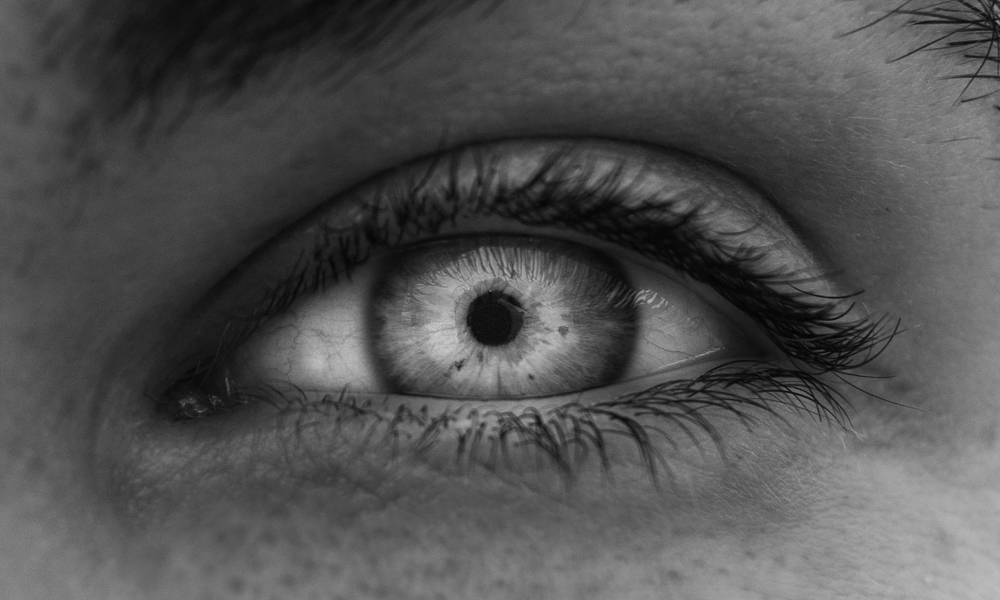
There’s a certain kind of prejudice in this world, and it isn’t pretty…
By Jesse Boland
If nobody today told you that you’re beautiful, it’s probably because you’re not.
If that statement was upsetting for you to read, then you should probably just close this tab now, because the rest of this article is about to get really ugly. And, yes, I will be using the word “ugly” frequently – because the phrase “not conventionally attractive” is simply too delicate to properly limn the significance of what will be discussed, as well as because I’m on a word count here. When we use words like “beautiful” and “ugly” to describe people, we are referring to the polar ends of the spectrum of attractiveness as well as the beneficiaries and victims of lookism. And if that term is a new word for you, get ready for a journey of perspective as we jump into the deep end of the pool of superficial shallowness.
Lookism refers to the prejudicial, discriminatory bias of people based on their level of physical attractiveness. It is one of the underlying discriminations of other types of intolerances such as racism, misogyny and ableism, as well as their subbranches such as featurism, colourism and fatphobia. Yet despite being such a fundamental foundation of so many forms of oppressive intolerances, lookism is rarely mentioned in either academic studies or HR anti-discrimination training. And that’s for one major reason: it’s ugly to talk about ugliness. Acknowledging that somebody, or even yourself, is unattractive is perceived as being shallow and superficial when, really, it is simply addressing the wildebeest in the room that everybody with two eyes can see.
Being considered ugly is deemed as being the most horrendous appellation a person can be, so much so that it has even morphed the actual definition of the word. The original etymology of the word “ugly” stems from the Norse word ugga and then uggligr, which means “to be dreaded,” whereas “beauty” comes originally from the Latin word bellus, meaning “to do, show favour, or revere,” before they both eventually evolved into the words they are today being qualitive terms for physical attractiveness. Now, with the knowledge that being ugly is perceived as such a hindrance that it literally means “to be dreaded,” and being beautiful is such a virtue that it is synonymous with reverence, is it not safe to say that a person’s level of physical attractiveness may determine their lived experience in society? If we can acknowledge that being pretty is a privilege, would that same logic not deduce that being ugly is handicap?
The thing about beauty and ugliness is that it is so difficult to discuss, because we like to pretend that beauty/ugliness is in the eyes of the beholder, when deep down we know that is not the case. Beauty is technically subjective, much like art, where it is open to interpretation and cannot be specifically defined, and therefore there are truly no “good” or “bad” looking people. But let’s be real with ourselves. Similar to art, there reaches a point of universal acceptance that something is good or bad despite its subjectivity. The Godfather is a good film, Katy Perry’s “Woman’s World” is a bad song, and any other opinion is void.
The same can be said for a person’s perceived level of attractiveness, which can be understood in something I have coined the “’90s Sitcom Blind Date Test.” Imagine an episode of Friends where Ross is supposed to go on a blind date with somebody that Phoebe set him up with; he goes to the door to greet his date and sees her for the first time. If the door were to open and the woman on the other side were to be played by either Cameron Diaz or Kathy Bates, we would immediately know, from the initial visual alone, exactly what the joke is and what the following story of the episode is going to be. If the door opens on Cameron, then Ross scored big but is probably going to mess this up; if it’s Kathy, then he is in trouble and we gotta see how he’s going to get out of this one. Hotness and ugliness are objective signifiers in visual mediums so much so that actors are sometimes literally credited as “Hot Guy” and “Ugly Friend #2” in castings. At a certain point, denying a recognition of someone’s blatant level of attractiveness is akin to saying, “I don’t see colour.”
Still not convinced? Think of the ways in which particular behaviour is either tolerated or punished based on the person who is doing so, and why that might be. Confidence may be considered the true test of beauty, but the true measure of ugliness is audacity. For people who are not fully secure in their appearance, it may be daunting to put themselves out there by positing a selfie or wearing a sexy outfit in public, but we as a society have at least been taught to celebrate people for being “brave” in pushing themselves out of their comfort zones and not say anything mean about them…as long as they’re nice. But when an ugly person has the audacity to be rude, mean or aggressive, the gloves come off, and we are seemingly given the green light to say the quiet part out loud and tell them what we’ve been holding in since we first laid eyes on them.
Lizzo was celebrated as the body positive queen of self-love for years because her image was that of a kind, funny, empowering person, so much so that we forgave her for not being conventionally attractive because of her weight and teeth. But the moment allegations were made in 2023 by her former dancers and creative director that she had created a toxic and emotionally abusive work environment, the public perception of the endearing fat woman went out the window, and people felt they were vouchsafed permission to hit ‘send’ on the nasty drafts they had been writing in their heads for years.
You have to pick a struggle; be ugly on the inside or the outside, because if your spirit matches what we see in front of us, you will be put in your place. And best believe, there is an unspoken place for people who look the way you do.
If reading this has maybe hit a little close to home for you because you’ve realized you are either a victim or a perpetrator of lookism – good. The first step in combating this discrimination is to accept that it does in fact exist systemically, and that we are all hegemonically complicit in it. But just as addressing our subconscious racism or internalized homophobia is integral to unlearning our unconscious biases, the same can be done for dismantling lookism. Questioning why we approach certain strangers at parties and not others, re-evaluating who we follow on Instagram and how that shapes our perceptions of what the average person is supposed to look like, and unpacking if someone is actually a nice person or if they’re just hot and smile when they speak – these are just some of the ways in which we can begin to combat our own prejudices and overcome the oily, wrinkled skin barrier of ugliness to recognize the human underneath it.
If you’re still reading this, I can only assume that you’re ugly – because a hot person would likely have been distracted by now by a DM from someone asking to have sex with them, but you weren’t. Accepting that beauty isn’t one of the gifts your parents left for you under the genetic Christmas tree is a tough pill to swallow, but it only proves that every other gift you have is a gift that you have earned. If people say that you are funny, kind, intelligent, charming or cool, you know they actually mean it, because they’re certainly not saying that just to sleep with you. Ugliness isn’t a curse, but it is a struggle, and it’s one you somehow manage to overcome every day, because it doesn’t define you that you don’t have the unfair privilege of beauty. If nobody today told you that you’re beautiful, it’s because you’re so much more than that.
JESSE BOLAND is that gay kid in class who your English teacher always believed in. He’s a graduate of English at Ryerson University (now Toronto Metropolitan University) who has a passion for giving a voice to people who don’t have data on their phones and who chases his dreams by foot because he never got his driver’s licence.


Guest / 19 December 2025
You taught me several new vocabulary words. I find the conclusion somewhat tepid. You make strong points then it feels like it putters out.