
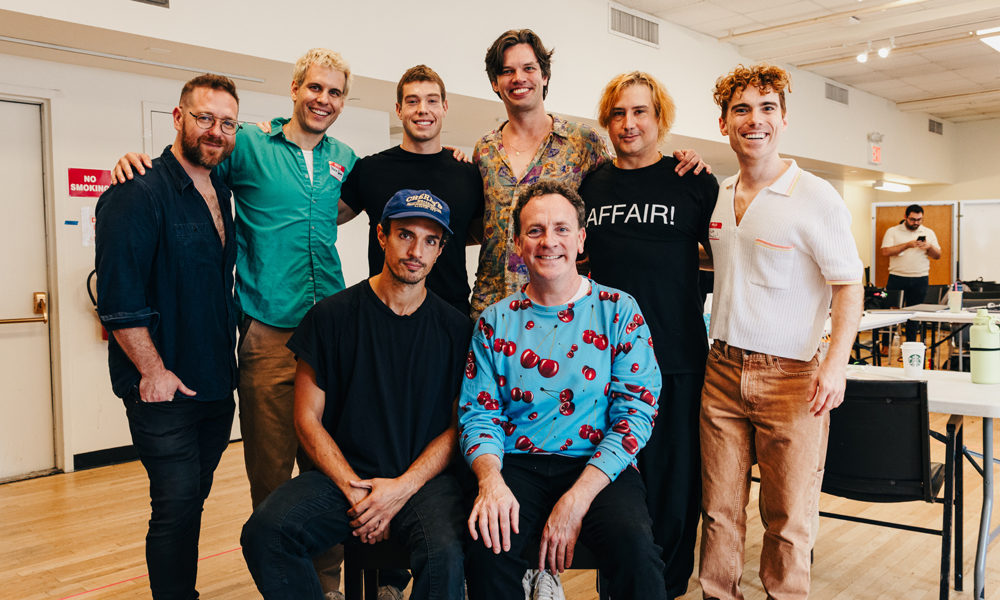
A conversation with actor/writer Drew Droege about his newest play, which takes a stab at unhinged white gays on the loose…
By Elio Iannacci
Drew Droege was born to be invited to brunch. His stories about being raised in the American South, living in Los Angeles and surviving the rigours of La La Land’s casting chaos are best heard over mimosas or Caesars (that’s Bloody Marys in America). His addictive storytelling is partly how so many queers – me included – got through the pandemic: we listened to his podcast Minor Revelations, with guests ranging from Bowen Yang to Fortune Feimster, or hopped onto YouTube to watch clips of him embodying the pretensions and peculiar wisdoms of actress Chloë Sevigny (with a swarthy yet cutting “Good Evening America”). For TV fans, his slew of credits includes Hot in Cleveland and Grey’s Anatomy.
His cameo in Luca Guirdinin’s Queer reintroduced the South Carolina–born talent to Hollywood’s always-slow-on-the-uptake casting directors. Theatre audiences, however, already knew what kind of brilliance he brought with the biting, witty and prescient plays he wrote and starred in, such as Happy Birthday, Doug and Bright Colors and Bold Patterns – both exposing modern gay life as fragile, radical, hysterical and histrionic.
His most news-inducing production, Messy White Gays (now in New York City), plays to his strengths once again. The cast includes the just-as-sharp Pete Zias, the gorgeous Derek Chadwick, and the always-beguiling James Cusati-Moyer and Aaron Jackson. Each is well chosen to blow up the twisted gay archetypes Droege writes, down to smithereens. The show’s set-up says it all, as it begins with a throuple that goes from three to two when one pair kills the odd man out. The press release for the play is already one for the books, stating:
“It’s Sunday morning in Hell’s Kitchen. Brecken and Caden have just murdered their boyfriend and stuffed his body into a Jonathan Adler credenza. Unfortunately, they’ve also invited friends over for brunch. And they’re out of limes! Feel bad for them! They’re MESSY WHITE GAYS!”
It makes sense that brunch is the backdrop, because Droege’s best work (whether on stage, screen or podcast) has the same flavour: sharp gossip, unfiltered honesty and boozy outrageousness, best savoured when the world is still a little hungover.
From his home in L.A., via Zoom, Droege reflected on the importance of diffusing drama on stage when the world is already facing so much of it off stage.
Your play of 2018, Bright Colors, Bold Patterns, touches on how there’s often this chokehold of ‘legislation’ on how a gay men should behave, and we’re the ones laying down these laws. Why do you think so many of us act like Bridezillas at weddings and mimic our worst straight counterparts?
We’re raised in a heteronormative society. A lot of us grew up around the other girls, so we can’t help do what they do. The irony is lost on most of us. You fight so hard to be queer, to be your yourself, and then you get into a community that just expects you to fall in line with heteronormative rules and basically be heteronormative again and play by the same rules we are supposed to be breaking. We are now getting the questions that our girlfriends hated: when are you going to get married? When are you buying a house? When are you getting a dog? When are you going to have a child? All those things are great, of course, if you want them, but they have to be like personal wants and needs versus just expectations. We have a lot of work to do to love ourselves as ourselves and not feel we are wrapped up in someone else’s society.
Do you believe there is such a thing as a safe space?
I don’t believe there’s such thing as a safe space, and I certainly don’t feel emotionally safe at a wedding! Every time someone calls something a safe space, I immediately feel otherwise! I’m kidding, of course. I don’t think I’ll be killed at a straight wedding; however, there is often a lack of taste with weddings, so I question why people from our group feel that there’s safety in mirroring the heterocentric. It takes up a weekend out of your life, thousands of dollars, and you continually have these aggressively boring best-friend-of-the-groom, brother-of-the-bride speeches. Then the mandatory dancing! That’s just always so awful! I love dancing, but don’t make me do it, you know? All the organized fun of it all. It’s a lot.
What do you think of queer spaces being swallowed up by non-queer people?
Straights are copying us – they are all going to Palm Springs and marrying at Stonewall! Every time I go to Stonewall, it’s full of bachelorette parties! We do need our queer spaces to remain that way, but I don’t have the answer.
You dealt with gay wedding rules and regulations in Bright Colors, Bold Patterns… how did you deal with the draconian laws of gay brunch in Messy White Gays?
I thought about murder and how we sort of dispose of each other easily. It’s a comedy, so I also wanted to make murder into caper – feel Clue. Feedback when I was first working on this was that it was really dark – Party Monster dark. So I turned it into people who are so privileged. They forgot that they had invited people over for brunch before they went ahead and murdered one of their throuple.
How does privilege and a strong sense of entitlement appall, inspire and disgust you as a comedian and writer?
I think a lot of people have good intentions and they want to be on the right side of history, and they want to say, ‘I stand with the trans community, I stand with the BIPOC community, and with women’s causes’ – all of that is absolutely what we all should be doing. It’s just that they – myself included – centre themselves in the narrative. You want to be support, but you also have to know it’s not about you right now.
What humours you the most about people with privilege?
I’m fascinated by those who think they’re doing the work and think they’re evolved. They make a real point to mention trans people, to mention pronouns with a, with a kind of a nervousness. I do believe that as gay men, we carry trauma – and I’m not to, sort of, belittle any of that – I try to be respectful even in our own community. But the performed wokeness is too much.
How were you able to tackle different points of view from different gay generations?
Well, my character, Carl, is in a different category when it comes to nightlife and popularity and the rest of the characters and, you know, the sexiness of being gay. He’s the at-home, bitter betty nosy neighbour – Carl is not in the throuple. It’s implied that my character is older – there are age jokes in there – but I didn’t want to make a comment about how young gays nowadays are killers and stupid and awful. I wanted [to show that] all of us are problematic and we can all do better. We have so much to learn from younger people. Carl is very much like locked into a lot of heteronormativity: there’s a lot of ‘I’m not the bad guy’ and ‘How dare you? I’ve been through this before, honey!’ and ‘Don’t come at me with all the new queer stuff.’ I check myself if I find myself doing anything askew. If I think, ‘that was racist of me to think that way,’ or ‘that was transphobic of me,’ I forgive and course-correct. You don’t have to be cancelled. You don’t have to be the devil or a pariah in the community if you’ve been mistaken or need educating.
What is so brilliant about your podcast, Minor Revelations, was your monologue at the top of the show, which went from furious to hilarious when talking about headlines or art. Did you find that that podcast was a vehicle to self-correct?
It was very helpful that way. When you start putting things out there, you realize that ranting can be a form of self-awareness. At a certain point, you figure out if I was just bitching or if I turn around a conversation or a judgment. Maya Angelou was a teacher of mine in college, and I was really harsh about her. I was a fan of her work and not of her as a human in a room. She told her students not to ‘assume familiarity’ when addressing her. I realized that I was also an asshole, because I was assuming that we would be best friends! It was my first interaction with a famous person for an extended amount of time. The older I get, the more I’m like, Maya Angelou. So many people remind me of that story.
As campy as it sounds, you are not going around saying, “Please let’s not assume familiarity,” right?
Oh no.
You’re such a John Waters fan: what works from John Waters hold up the mirror to where we’re at right now?
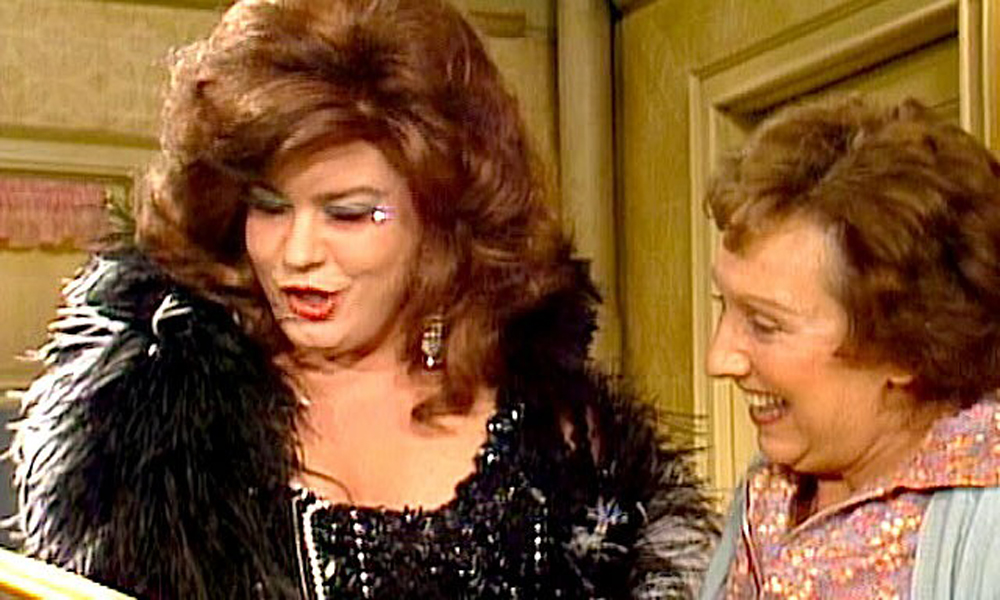
I would absolutely demand people watch Serial Mom. It is an evisceration of that ’90s decade and our obsession with crime of the OJ, Menendez brothers, Amy Fisher, kind. All that was happening when the movie came out so he couldn’t have predicted all of it, but he was close. Then the scenes and the lines are classic: don’t wear white after Labour Day, don’t steal my parking spot at the grocery store – I love the extreme of that. Kathleen Turner should have been nominated for an Oscar for that performance. It’s impeccable.
Is there a John Waters character that you relate to the most?
My favourite character in any John Waters movie is Peggy Gravel in Desperate Living – she’s Mink Stole’s character. It’s the most unhinged. I hope I don’t relate her, but it’s the most panicked, suburban, awful white woman who has learned all the wrong lessons in life, who cannot be satisfied.
Which scenes in the Messy White Gays were the toughest to finish?
The beginning. I have characters coming in about every 10 pages. The first 10 pages with it, with our main couple, was tricky because – as a flow rule – the play gets funnier as it goes. It opens with a murder, so you’re slowly getting into who these people are. So I had to really calibrate. I didn’t want it to be too wacky out of the gate, and I wanted you to believe what’s happening. That said, I’ve just rewritten an ending for Carl that I think is satisfying.
One of the first people you cast was Pete Zias, who says Hollywood is both askew and crumbling. Do you agree or disagree?
I 100 per cent agree. Pete is also one of the funniest people on the planet, and he knows how to dole out the truth and make you laugh at the same time.
Tell me more about Carl and his background and where he would likely grab a drink.
Carl has a Black husband and loves telling people that fact. He loves to work it into conversations, so he feels a little bit superior to his white friends with white husbands – he feels more woke yet there are important things that he’ll never understand about his husband.
Where would your other Messy characters go for a drink?
Whatever the newest bar would be opening that night. And then they would never go back there again and never be seen in there again. Thacker is definitely at the Monster waiting for Lady Bunny to DJ, or at the Limelight, still trying to make that happen. Caden would definitely be going to Julius but trying to teach younger queers about gay history.
Which musical divas would your Messy characters worship?
Brecken would definitely be into Renee Rapp. Caden would be in the world of, like, Chappell Roan. Addison would love Blackpink. Thacker would be Madonna, dancing with Labubus and watching Wendy Williams all day. Carl would love Sylvester and all the ’70s disco stuff.
You’re a fan of Alfred Hitchcock and Rope. What would you say are the best moments from the film?
When the alpha gay character says, “The lives of inferior beings are unimportant,” which, I think, is like so much. It’s so cruel. That’s the spine of that film. A lot of Hitchcock is queer coded – Strangers on a Train is so queer, Psychoblatantly so. The lesbian undertones in The Birds are so wild. He kind of saw the world as one big kink. None of the people he writes are okay. Tippy Hedren’s character is lunatic: she takes birds to Bodega Bay to pull a prank. She’s unwell.
Do broken people make for great writing?
Listen, when you get the note that the characters have to be likable, ignore it. It’s so lazy. If the actor is good, and likable, the character can be a mess. I don’t like likable characters, you know? I don’t like Mrs. Maisel – I find her dull. I relate to Valerie Cherish in The Comeback. I love a broken messy lead, because that’s who we are. Let’s see people who have lost all sense of artifice.
I find it so funny when you talk about how certain family members cherish mild-tasting food and art as if that is something to be celebrated.
There’s a whole market for mild, and thank God we have a counter market. Everyone’s so scared to say anything right now. We should all be empowered to speak our minds, yet for some people, mild is comfortable, and mild is acceptable and politically neutral. I don’t need to eat spicy food every day, but I’d rather talk about spicy food more than about mayonnaise.
What has been the messiest thing you’ve ever witnessed on stage or off from a white gay?
I did see a solo show where somebody was basically talking the entire time about how hot and desirable they were and how everyone was mad at them because of it. The stories ended up being about how great they were in bed…but the big reveal at the end was, they took off a toupée and said, ‘I’m actually losing hair,’ and we were supposed to feel bad for them.
You’re making queer theatre at a moment when lawmakers [in the U.S.] are literally, like, chiselling letters off Stonewall and introducing insane bills designed to erase us. How do you see live performance pushing back against this erasure?
Good theatre comes from a place of rage. We all have to deal with that. I write comedy, but I also wrote a play that has more on its mind and does make people think. Maybe to be better people or not to be these people? Or to realize… has this been me? We can all laugh in a room together. I’m so excited to join a community of queer artists in New York with O Mary and Prince Faggot and Death Becomes Her. Julio Torres is doing a show, and Ryan Rapherty – there’s so much queer art that’s happening in the city, and I know we’re all going to help lift each other up. There’s a strength in numbers.
ELIO IANNACCI is an award-winning writer, a poet and a long-time arts reporter for The Globe and Mail. He has contributed to 80 publications worldwide, including Vogue Italia, The Hollywood Reporter, Maclean’s, The Toronto Star and Sotheby’s Insight magazine. His master’s thesis, Queer-Diva Collaboration in 20th Century Popular Music, was nominated for a Governor General’s Gold Medal.
POST A COMMENT